
Speakers
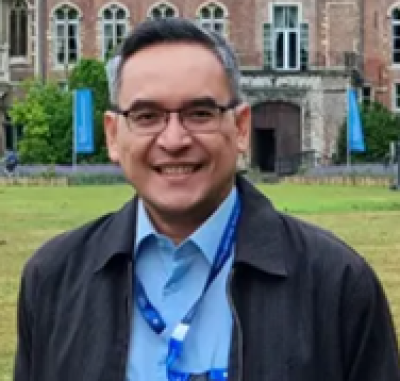
Prof. Dr. Mukhamad Najib, S.TP., M.M.
Prof. Dr. Mukhamad Najib, S.TP., M.M., is a senior academic and government official currently holding a pivotal position in Indonesian higher education policy, serving as the Director of Institutional Affairs within the Directorate General of Higher Education (Ditjen Dikti) at the Ministry of Education, Culture, Research, and Technology (Kemendikbudristek).
Academic Background and Expertise
Professor Najib's educational foundation in Agricultural Technology and Business Management provides him with a unique, interdisciplinary perspective to lead institutional development in higher education.
- Education: He holds a Bachelor of Agricultural Technology (S.TP.) and a Master of Science (M.Si.). His doctoral degree (Dr.) is in a field related to Management and Marketing, which bolsters his expertise in institutional analysis and organizational strategy.
- Expertise: His core areas of specialization include Strategic Management, Agribusiness Marketing, and Institutional Economics. This background is highly pertinent to formulating policies concerning the governance and sustainability of higher education institutions.
Role at the Directorate General of Higher Education
As the Director of Institutional Affairs, Professor Mukhamad Najib plays a crucial role in shaping the direction and quality of higher education institutions across Indonesia.
- Institutional Development: He is responsible for regulations and policies governing the establishment, transformation (e.g., mergers), and cessation of higher education institutions. This role is vital for structuring the higher education ecosystem to be more efficient and relevant.
- Governance and Autonomy: He leads initiatives focused on improving university governance, including the implementation of campus autonomy policies aimed at enhancing academic quality and competitiveness.
- University Transformation: His involvement is essential in overseeing strategic programs of Ditjen Dikti, including the State University with Legal Entity status (PTN-BH) scheme and the development of centers of excellence across various campuses.
Academic Career
Before his bureaucratic appointment, Professor Najib was an active member of the academic community at IPB University (Bogor Agricultural University). He is a dedicated Professor who has made significant research contributions in agribusiness and management.
Professor Dr. Mukhamad Najib seamlessly integrates his profound academic expertise in management and institutional economics with a strategic policy-making role at the national level. He is a central figure in the government's effort to strengthen the institutional foundation of Indonesian higher education to achieve global standards.
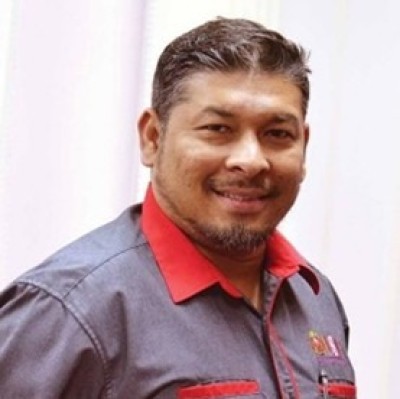
Prof. Dr. Muhammad Kamarul Kabilan
Prof. Dr. Muhammad Kamarul Kabilan is a distinguished academic, serving as a Professor at the School of Educational Studies at Universiti Sains Malaysia (USM). He is widely recognized for his expertise and extensive scholarly contributions at the intersection of English Language Education (TESOL) and Educational Technology.
Key Research Trajectories
Professor Kamarul Kabilan's research agenda is highly contemporary, focusing on innovative pedagogical practices and teacher professional development in the digital age. His main research areas include:
- ICT and English Language Pedagogy: Exploring the integration and impact of various technologies, ranging from e-portfolios and social media platforms for reflective practice, to the cutting-edge applications of Chatbots and Generative AI (e.g., ChatGPT) in second language instruction and academic reading.
- Teacher Professional Development (TPD): Investigating the experiences, needs, and efficacy of TPD programs, with a focus on collaborative online learning models and their alignment with national educational blueprints (e.g., the Malaysian Education Blueprint).
- Critical and Creative Teaching Practices: Advocating for and studying pedagogical shifts toward more reflective, critical, and innovative teaching approaches among in-service and pre-service teachers.
Scholarly Output and Recognition
A prolific researcher, he has published in premier academic outlets, underscoring his influence in the field.
- Select Publications: He has published in top-tier journals, including TESOL Quarterly, the British Journal of Educational Technology, Computers & Education, and Teaching and Teacher Education.
- Recent Focus: Recent publications (up to 2025) reflect his continuous engagement with emerging trends, including the efficacy of Gamification in higher education, and empirical studies on the online language teaching and learning (OTL) experience. He also contributed as an editor for a forthcoming book on OTL.
Professor Kamarul Kabilan remains a central figure in shaping discourse on technology-enhanced language education and sustainable professional growth for English language teachers in Malaysia and the wider Asian region.

Associate Professor Dennis Alonzo
Assoc. Prof. Dennis Alonzo is a prominent scholar currently affiliated with the School of Education at the University of New South Wales (UNSW Sydney), Australia. He is highly regarded for his expertise in applying advanced psychometric models and educational data analytics to improve assessment and learning outcomes.
Key Research Trajectories and Expertise
A/Prof. Alonzo's research primarily focuses on leveraging quantitative methodologies to address complex issues in educational measurement, assessment design, and personalized learning. His core areas of expertise include:
- Psychometrics and Educational Measurement: Utilizing sophisticated statistical models, such as Rasch Measurement Theory and Item Response Theory (IRT), for developing, validating, and standardizing high-stakes educational and psychological assessments.
- Assessment and Feedback: Investigating the design and impact of assessment practices, particularly focusing on effective feedback mechanisms and the utilization of technology (e.g., automated scoring and e-assessment) to improve learning efficiency.
- Data Analytics in Education: Employing large-scale educational data to derive insights into student performance, curriculum effectiveness, and instructional quality.
Scholarly Output and Impact
A/Prof. Alonzo has contributed significantly to the academic literature, with publications in leading journals in educational measurement and assessment.
- Applied Research: His work often bridges theory and practice, providing empirical evidence to inform assessment policies and curriculum development, particularly in areas such as assessing teacher professional competence and evaluating the impact of educational interventions.
- International Collaboration: He maintains strong collaborative links with researchers and institutions globally, actively participating in studies concerning comparative international assessments and capacity building in psychometrics in the Asia-Pacific region.
Associate Professor Alonzo is dedicated to advancing the scientific rigor of educational assessment to ensure reliable and meaningful measurement of learning across various contexts.
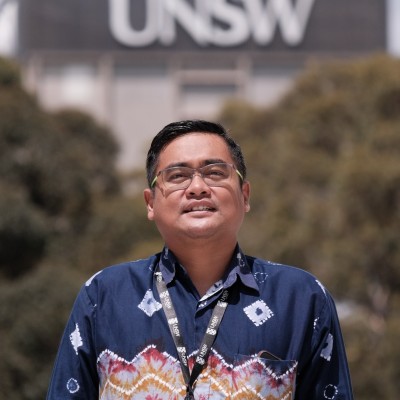
Wendi Wijarwadi, Ph.D.
Wendi Wijarwadi, Ph.D. is a casual academic (Research Assistant and Teaching Assistant) at the University of New South Wales (UNSW) Sydney, Australia. He is pursuing his doctorate in the Faculty of Arts, Design & Architecture with a research focus on teacher collaboration in Indonesian schools, examining how it is conceptualised and enacted in practice. Prior to his doctoral study, he completed a master’s degree at the College of Education and Human Development, University of Minnesota Twin Cities, majoring in Human Resources with a minor in Program Evaluation, which strengthened his expertise in teacher professional development and educational evaluation. He is a fully funded awardee of the Indonesian Endowment Fund for Education (LPDP) for his Ph.D. program at UNSW.
Academic Positions and Background
• Casual Academic (Research Assistant and Teaching Assistant), UNSW Sydney.
• Ph.D. candidate in Education, UNSW Sydney, with a dissertation on “Teacher Collaboration in Indonesia: Conceptualisation and Practices”.
• Master’s degree, College of Education and Human Development, University of Minnesota Twin Cities (major in Human Resources, minor in Program Evaluation).
• LPDP (Indonesia Endowment Fund for Education) scholarship recipient for doctoral study.
Research Interests and Expertise
Wijarwadi’s scholarly interests revolve around teacher collaboration, teacher professional development, mentoring, learning assessment, and multicultural education. His work explores how collaborative practices among teachers are shaped within Indonesian schools and how such collaboration can enhance the quality of instruction and assessment.
• Main areas of interest: teacher collaboration, teacher professional development, mentoring, learning assessment, and multicultural education.
Publications and Academic Achievements
He has co authored journal articles and book chapters that address the use of social media for assessment purposes and mentoring for pre service TESOL teachers. One of his notable works is the article “Using social media for assessment purposes: Practices and future directions” in Frontiers in Psychology, which discusses current practices and future possibilities of social media based assessment. He is also a co author of a chapter on mentoring pre service TESOL teachers in the Handbook of Language Teacher Education (Springer), providing a systematic review of mentoring practices across contexts.
Wijarwadi has received several academic recognitions, including the People’s Choice Award in the Three Minute Thesis (3MT) competition at both faculty and university levels at UNSW and a research grant from the New South Wales Institute for Educational Research (IER). Through his combined roles as researcher, teaching assistant, and award winning doctoral candidate, he contributes to international scholarship on teacher collaboration and learning assessment while bringing Indonesian perspectives into global discussions on education.
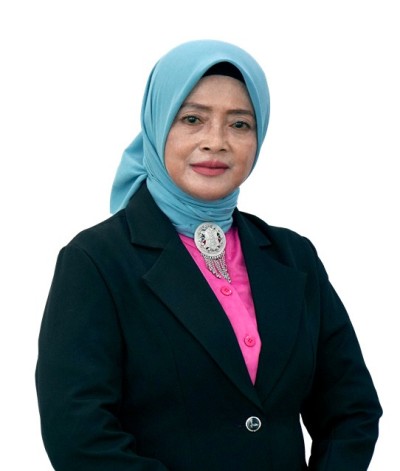 Dr. Nani Ratnaningsih, M.Pd.
Dr. Hj. Nani Ratnaningsih, M.Pd. serves as the Dean of the Faculty of Teacher Training and Education (Fakultas Keguruan dan Ilmu Pendidikan/FKIP) at Universitas Siliwangi, Tasikmalaya. In her leadership role, she is known for her dedication in building a supportive academic environment, providing guidance, and motivating students throughout their studies in FKIP.
Academic Position and Leadership
• Dean, Faculty of Teacher Training and Education (FKIP), Universitas Siliwangi.
• Leads academic policy, program management, and quality assurance for teacher education programs at Universitas Siliwangi.
• Actively supports student development through mentoring, encouragement for timely graduation, and facilitation of academic services in FKIP.
Scholarly and Scientific Profile
Dr. Hj. Nani Ratnaningsih, M.Pd. has an academic background in education, with a focus on teacher training and the development of instructional quality at the school level. Her scholarly interests are oriented toward improving learning processes, strengthening pedagogical competence, and enhancing the professionalism of future teachers, especially in basic and secondary education.
• Main fields of interest: educational management, teacher professional development, and the quality of teaching and learning in schools.
• Frequently mentioned in undergraduate theses and academic works as a dean who provides direction, academic advice, and motivation to pre service teachers.
• Contributes to the design and implementation of academic programs that integrate pedagogical, professional, social, and personal competencies for FKIP students.
Through the combination of academic expertise and dean level leadership, Dr. Hj. Nani Ratnaningsih, M.Pd. plays an important role in advancing teacher education at Universitas Siliwangi and in preparing graduates who are pedagogically competent, have strong character, and are responsive to contemporary educational challenges at regional and national levels.